Probiotics are live bacteria and yeasts that may benefit health when taken in adequate amounts. Common groups such as Lactobacillus and Bifidobacterium can help support a balanced gut microbiome, aid digestion, restore bacteria after antibiotic use and may strengthen the gut barrier and immune function.
Probiotic food
Good probiotic foods include live-culture yoghurt, kefir, sauerkraut, kimchi, miso, tempeh and some kombucha. These foods may add beneficial bacteria, support microbial diversity, aid digestion and reduce the risk of antibiotic-associated diarrhoea. For best results, choose products labelled “live and active cultures” and combine them with fibre-rich foods.
Benefits of Probiotics
In a 2021 systematic review in the British Medical Journal Open found that probiotics reduced antibiotic-associated diarrhoea in adults, especially in people at moderate or high baseline risk. Reviews have also found that selected strains may reduce overall symptom burden and abdominal pain in some adults with irritable bowel syndrome. However, effects are strain-specific, dose-dependent and vary from person to person.
Probiotic supplements
A well-designed probiotic supplement should provide named, researched strains in effective doses and use delivery technology that helps live organisms survive stomach acid. When matched to a clear need, it may support microbial balance, reduce antibiotic-associated diarrhoea, ease some digestive symptoms and help protect the gut barrier.
Optimum probiotic absorption
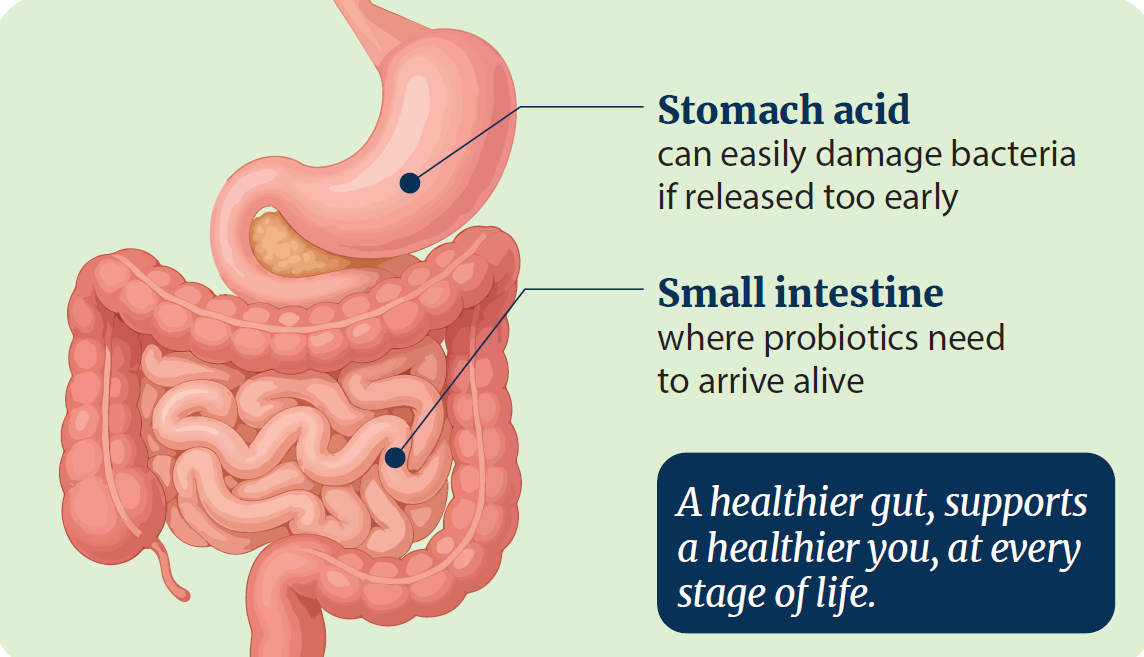
Absorption and survival are crucial. Even a well-formulated probiotic is of limited value if too many live organisms are destroyed before reaching the intestine. Stomach acid can damage probiotic bacteria when ordinary capsules dissolve too early, reducing the number of viable organisms available to influence the gut.
In the 2017 International Journal of Pharmaceutics a study found that many commercial probiotic strains and non-enteric oral forms showed poor survival in simulated gastric juice unless strong acid-resistant protection was present. This helps explain why capsule design, storage conditions and expiry-date potency matter, not just the headline number of bacteria on the label.
Delivery Technology
The traditional approach to address this issue is to either put in large amounts of probiotics and hope that a sufficient number survive, or apply an enteric, or acid-resistant coating to the capsule. While this is generally more effective than no coating, it is difficult to get perfect coverage, and this can adversely affect survival rates.
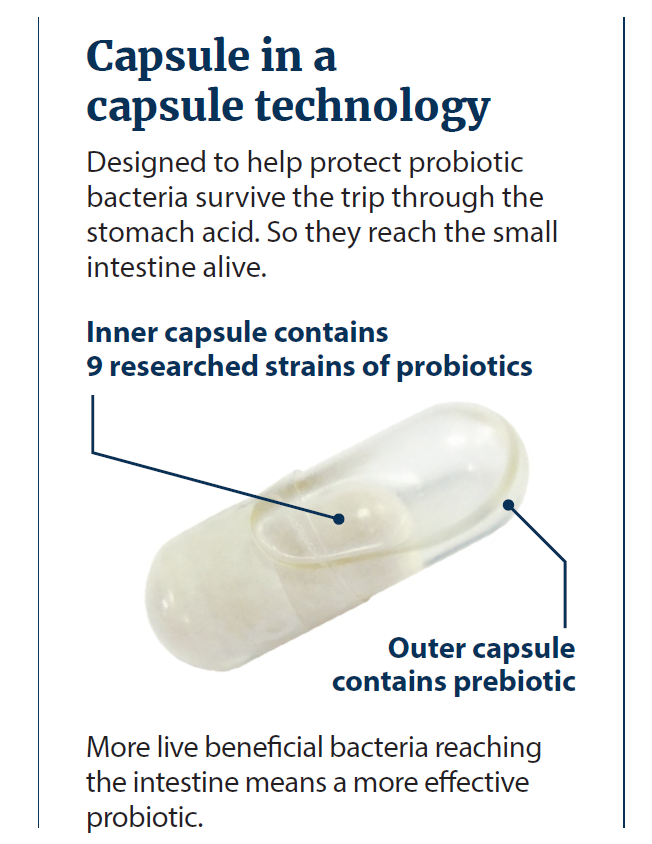
A more modern approach is capsule-within-a-capsule technology. A 2020 Beneficial Microbes experiment using a dynamic stomach-and-small-intestine model reported higher probiotic survival after gastric transit and through the upper gastrointestinal tract compared with powder or an inner capsule alone. This suggests delivery systems may improve the number of live organisms reaching the gut, although human outcomes still depend on the strain, dose and individual need.
Summary
Probiotics are not a magic shortcut to better health, but the right product can be useful when chosen carefully. The strongest evidence supports targeted use, such as reducing antibiotic-associated diarrhoea and easing some IBS symptoms. Benefits depend on the strain, dose, product quality, delivery system and the person taking it. For best results, probiotics should complement, not replace, a fibre-rich diet, fermented foods, sleep, exercise and sensible antibiotic use.